
The Psychology Digest

  • Navigating Youth Mental Health Challenges in Today’s World: How To Determine & Support Dual Diagnoses

    by

    Today’s clinicians play a critical role in supporting the mental health and wellbeing of young people amid growing awareness and need. According to the September 2025 issue of Pediatrics, the journal of the American Academy of Pediatrics (AAP), 13% to 20% of children live with a mental health, emotional and behavioral challenge. An additional 19% exhibit symptoms that cause impairment or distress but don’t meet diagnostic criteria for a specific disorder. Children and adolescents are also increasingly receiving multiple diagnoses — e.g. depression and anxiety or autism and ADHD.

    read more

  • Get Ready for BASC-4: What the Authors Want You to Know About the Latest Edition

    by

    Mental health screening and assessment tools are more important than ever, and one of the most foundational tools—the Behavior Assessment System for Children (BASC)—is soon to be released by Pearson in its fourth edition. As discussed in a recent episode of Healthy Minds, Bright Futures: How to Navigate Mental Health and Build Support, the BASC-4 includes important updates for clinicians and educators while retaining the evidence-based approach that has made it a trusted and effective suite of resources for nearly 40 years.

    read more
  • Supporting the Spectrum: How To Address Autism and Co-Occurring Conditions

    by

    In recent decades, an increasing number of children have been diagnosed with autism spectrum disorder (ASD) across the U.S. According to the latest CDC data, the number of 8-year-olds identified with ASD is about 1 in 31. However, as discussed on a recent episode of our podcast, “Healthy Minds, Bright Futures: How to Navigate Mental Health and Build Support,” there is more to that number than meets the eye.

    read more
  • The BASC™ Family of Solutions as a Catalyst for Student Growth

    by

    There has been a growing recognition within the education sector, echoed across society more broadly, of the increasing mental health challenges facing students. More children and adolescents are receiving diagnoses, and more schools are reporting a rise in the number of students seeking mental health support services.

    As K–12 educators and clinicians respond to this reality, there has been a corresponding shift in the understanding that timely intervention can significantly influence a student’s academic outcomes and overall wellbeing.

    read more
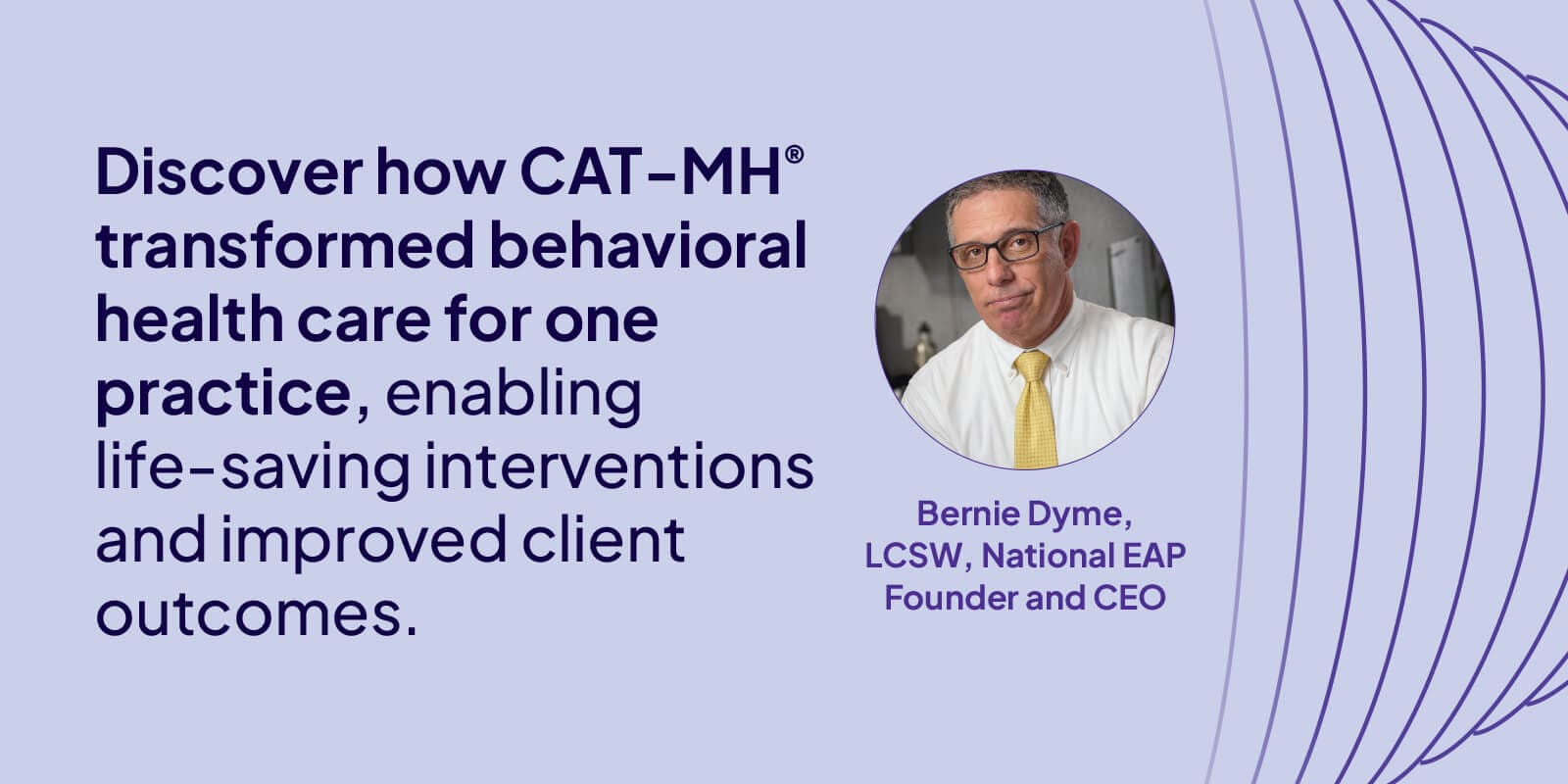
  • Transforming behavioral health care with actionable, timely data

    by

    How CAT-MH® helped one practice save lives

    In the world of behavioral health, every moment counts. When someone reaches out for help, there's often a narrow window of opportunity—one that can close quickly if the right support isn't available immediately. For Bernie Dyme, a licensed clinical social worker with over four decades of experience, finding ways to maximize that critical window became essential as his practice grew.

    read more
  • Uncovering the hidden mental health crisis behind community violence

    by

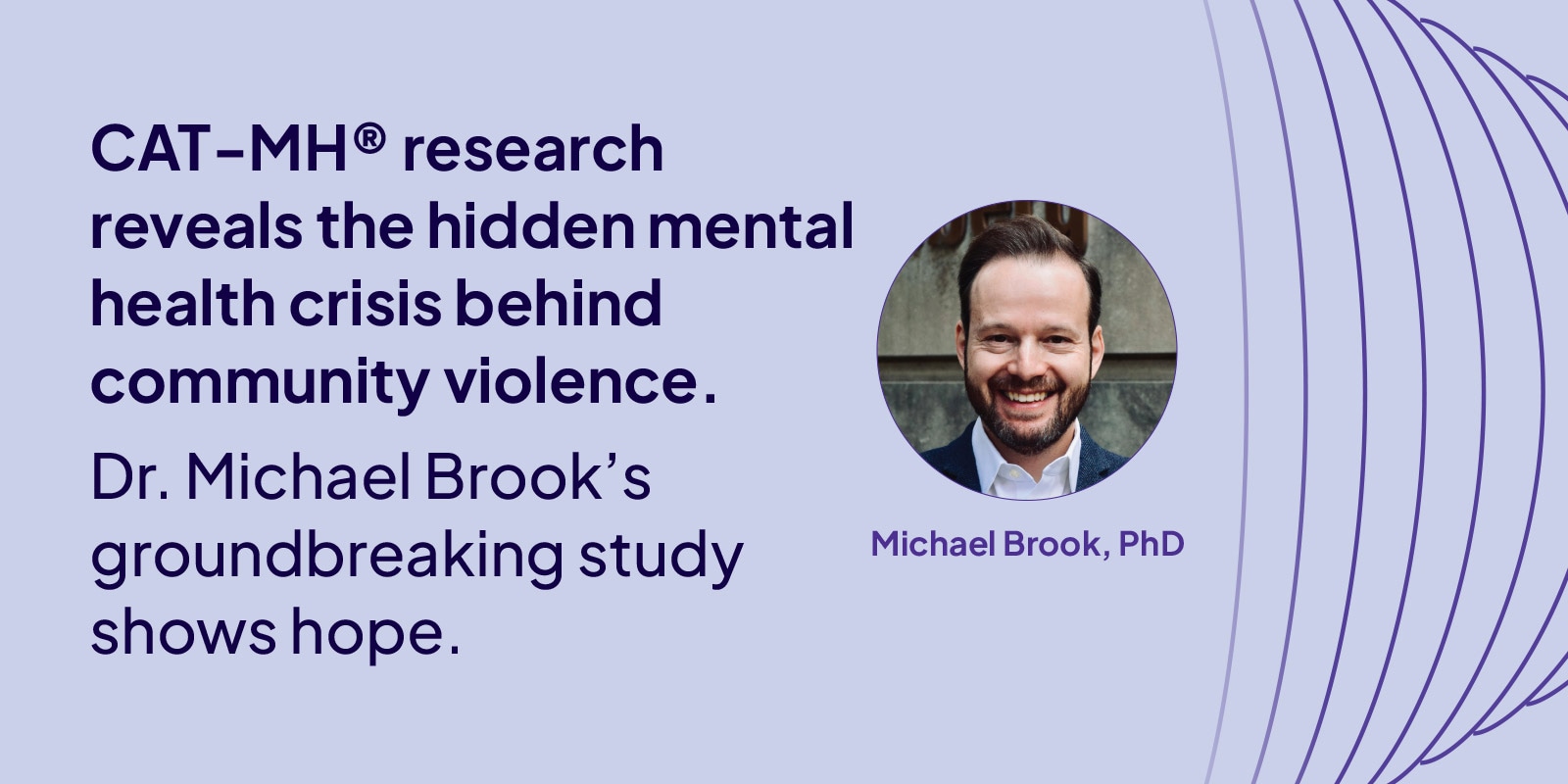
    CAT-MH research reveals the hidden mental health crisis behind community violence. Dr. Michael Brook's groundbreaking study shows hope

    What if the young people involved in community violence were just individuals struggling with untreated mental health conditions? 

    This question lies at the heart of groundbreaking research that's changing how we understand and address violence in our communities.

    Dr. Michael Brook, associate professor at Northwestern University's Feinberg School of Medicine, has spent years studying this connection. His work reveals something most people don't realize: the majority of young people who become involved in community violence have significant histories of trauma, depression, hopelessness, and other mental health conditions that directly increase their risk.

    read more
  • What are Fundamental Movement Skills and why do they matter for OTs and PTs?

    by Melinda Cooper, OT, MBA, Product Manager

    A group of kids playing and jumping outside together

    If you're an occupational or physical therapist, you probably spend a lot of your day thinking, talking, and reading about motor skills. But have you ever come across the term “Fundamental Movement Skills”? Until recently, I hadn't, but it turns out there is a whole body of literature devoted to studying and discussing this construct that is, well, fundamental to children's ability to engage in play, recreation and activities of daily life. Sounds pretty relevant to what we do, right?

    read more